Views: 4 Author: Site Editor Publish Time: 2025-10-28 Origin: Site
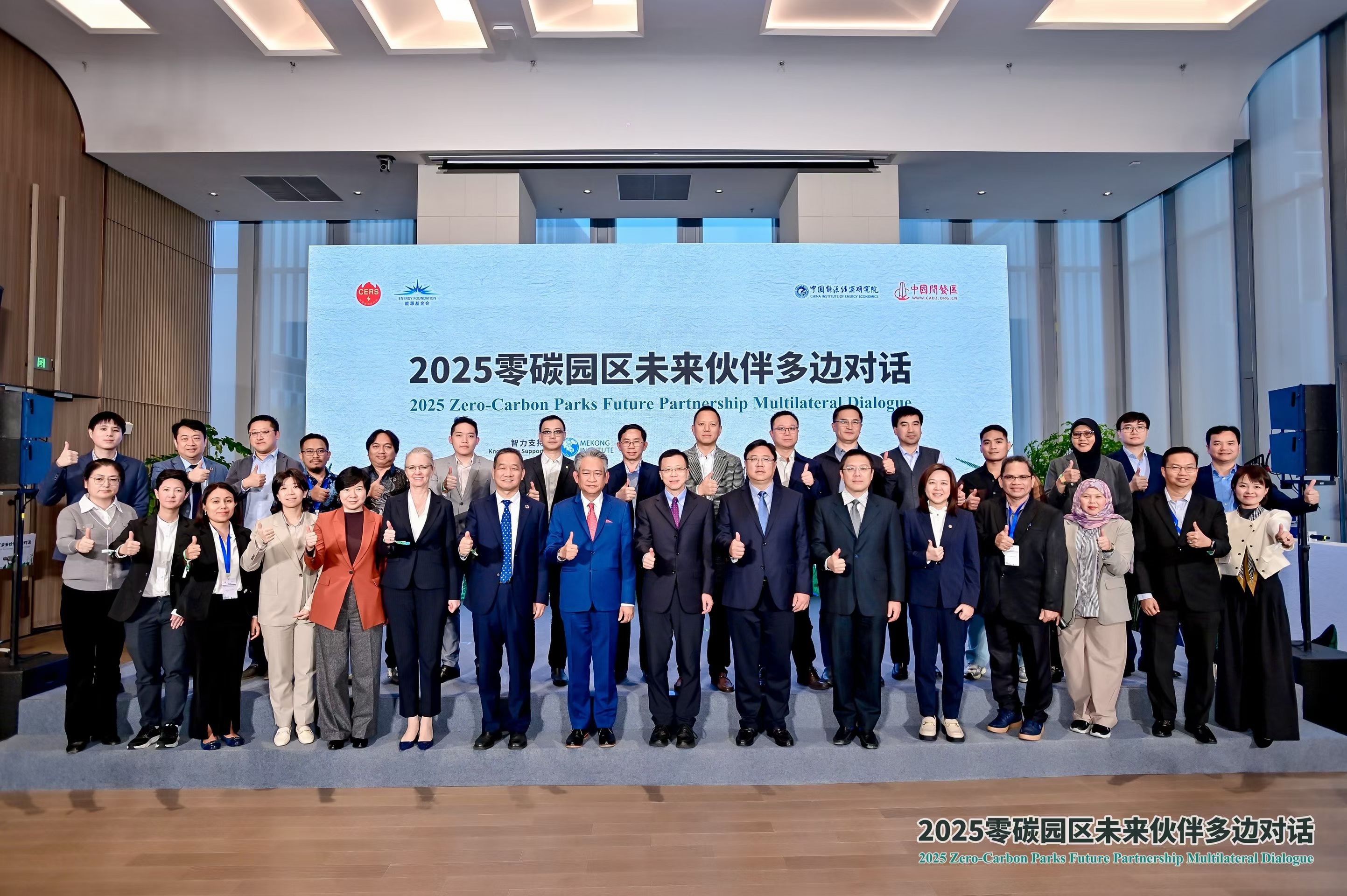
Recently, the "2025 Zero-Carbon Park Future Partners Multilateral Dialogue" event, jointly hosted by the China Energy Research Society, China Energy Economic Research Institute of China Energy News, China Development Zone Association, and supported by the Mekong College, was successfully held in Suzhou. Over 150 representatives from government departments, research institutions, industrial parks, energy service enterprises, and financial and investment institutions gathered to explore innovative pathways for the construction of zero-carbon parks and green, low-carbon transformation. As a global leader in photovoltaic manufacturing and new energy solutions, ZNSHINE SOLAR was invited to participate in the event as a first-time meeting supporting unit. The company’s Marketing Center General Manager, Huang Jianhong, represented the company and delivered a speech on "Accelerating the Zero-Carbon Process—Technological and Model Innovation," sharing ZNSHINE SOLAR's practical experience and industry insights on the construction of zero-carbon parks.
In his speech, Huang Jianhong emphasized that the construction of zero-carbon parks cannot be achieved overnight. It involves multiple aspects such as energy supply, industrial structure, infrastructure, and operational management. Sustainable development of these parks relies on a unified, scientific, and internationally recognized standards system. Currently, the fragmentation of industry standards and inconsistencies in certification systems have become major barriers to the implementation of these parks. Huang highlighted the critical role that government policies and incentives play in promoting the construction of zero-carbon parks. He called for accelerated development of standard co-construction and mutual recognition mechanisms, urging closer alignment of China’s standards with international systems. He stated, “Only by creating a system with unified standards, quantifiable indicators, and mutually recognized and traceable certifications, can the achievements of zero-carbon park construction be widely recognized and lead to high-quality, replicable, and scalable development.”
When introducing ZNSHINE SOLAR’s innovative practices, Huang noted that the company has always been driven by technological innovation, actively investing in areas such as photovoltaic manufacturing, integrated solar-hydrogen-storage solutions, and BIPV/BAPV system integration. As one of China’s first companies to enter the solar hydrogen production sector, ZNSHINE SOLAR is exploring a new model of multi-energy complementarity, combining "photovoltaics + energy storage + hydrogen energy." This model provides technical support for parks to achieve self-sufficiency in clean energy and maximize energy efficiency. Huang emphasized, “ZNSHINE SOLAR adheres to the mission of ‘making green electricity more efficient.’ Through innovative technologies and system integration capabilities, we offer a full lifecycle green solution for parks, from module manufacturing and energy management to intelligent operation and maintenance, helping the industry chain achieve deep decarbonization and high-quality development.”
At the event, ZNSHINE SOLAR representatives engaged in in-depth discussions with representatives from ASEAN countries and international organizations, reaching broad consensus. Participants agreed that the construction of zero-carbon parks is not only an important initiative for China’s green transformation but also a common direction for global industrial collaboration and energy structure transformation. ZNSHINE SOLAR will actively participate in the "China-ASEAN Zero-Carbon Park Future Cooperation Partners Project" based on its business presence in over 60 countries and regions, promoting deep cooperation in areas such as clean energy, green manufacturing, and industrial collaboration within the region. Zero-carbon parks not only serve as a model for the energy revolution but also provide a critical opportunity for reshaping global industrial chains. ZNSHINE SOLAR looks forward to working together with all parties, using standards as a bridge, innovation as an engine, and collaboration as a bond, to jointly create an open, win-win zero-carbon ecosystem.
This event not only established an international dialogue platform but also provided valuable ideas and experiences for the construction and development of zero-carbon parks. Experts discussed how to break development bottlenecks and promote global low-carbon transformation through technological innovation, policy guidance, and capital support. According to the country’s latest "14th Five-Year" plan, China aims to build approximately 100 national-level zero-carbon parks by 2035. The construction of zero-carbon parks is now entering an accelerated phase, and the active participation of new energy companies such as ZNSHINE SOLAR will inject stronger momentum into achieving the "dual carbon" goals, while contributing China’s wisdom and solutions to global energy transition and sustainable development.